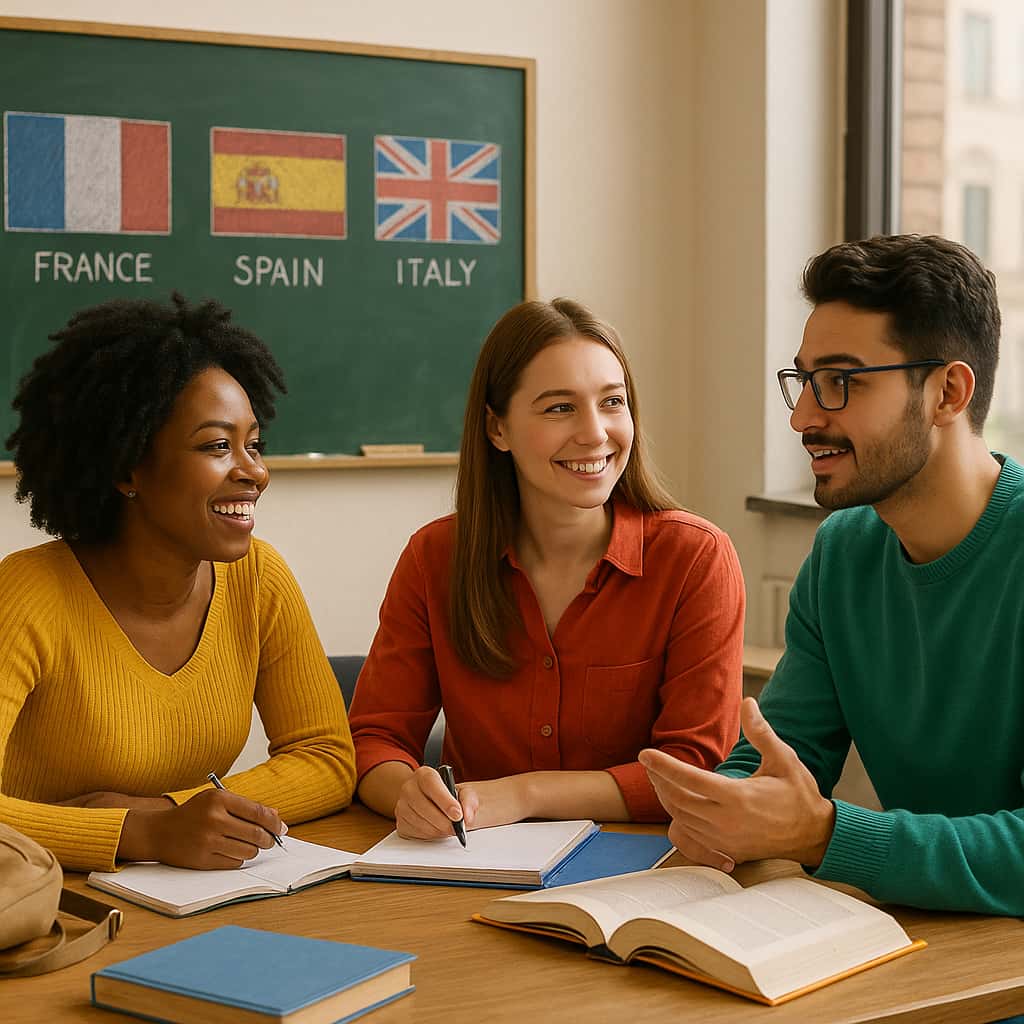
You can become a strong speaker without studying abroad. Travel increases exposure, but exposure alone does not guarantee interaction, feedback, or deliberate practice. A home routine can create those conditions more consistently by combining understandable input, regular speaking, real purposes, and a way to notice and correct recurring problems.
Build an immersion system at home
- Give one daily activity—news, cooking, gaming, or exercise—a target-language version.
- Schedule speaking sessions that require spontaneous answers rather than rehearsed dialogues.
- Join a community connected to an interest so the language carries a real social purpose.
- Keep a short list of communication problems and deliberately retest them in later conversations.
What Is Language Immersion—And Why Does Everyone Recommend It?
Immersion, in its purest form, means surrounding yourself with a language: living among its native speakers, relying on it for daily needs, and absorbing not just grammar and vocabulary but cultural cues and idiomatic expressions. Linguists have long argued that this intense exposure accelerates comprehension and speaking skills. After all, children pick up their first language by immersion—why can’t adults?The Science: Does Immersion Guarantee Fluency?
To answer that, let’s look at the research. While immersion can give learners a boost in contextual understanding and real-world communication, studies reveal a nuanced picture. According to peer-reviewed research in language acquisition, exposure alone doesn’t ensure fluency. Many learners plateau or stick to native-language “bubbles,” even while living abroad. Motivation, meaningful interaction, and targeted speaking practice are just as crucial as location. Furthermore, the pressure and anxiety of interacting in a new culture can sometimes hinder progress more than help it. Not everyone thrives in full immersion, and the myth that simply “being there” will lead to fluency doesn’t always hold up. Learners often need explicit correction, structured feedback, and opportunities to practice comfortably.Alternatives to Studying Abroad: Can You Recreate Immersion at Home?
Given travel expenses and life obligations, many don’t have the luxury to move overseas for months. Fortunately, effective strategies exist for building immersive experiences wherever you are:- Online conversation partners and speaking platforms: Connecting with native speakers or AI tutors gives you regular, low-pressure opportunities to converse.
- Media-driven exposure: Curated films, podcasts, and news in your target language boost listening comprehension and cultural familiarity (British Council insights).
- Structured role-play and scenario practice: Practicing for real-world situations (ordering food, making small talk) alongside instant correction accelerates both vocabulary and confidence.
- Community involvement: Local language meetups or online groups can provide authentic interaction and social motivation.
Leave a Reply